
Winter Weather’s Impact on Hospital Facilities and EVS Operations
Posted on February 9th, 2026
How a Record Snowfall, Foot Traffic, and Respiratory Illness Surges Drive Labor Demand and Asset Wear
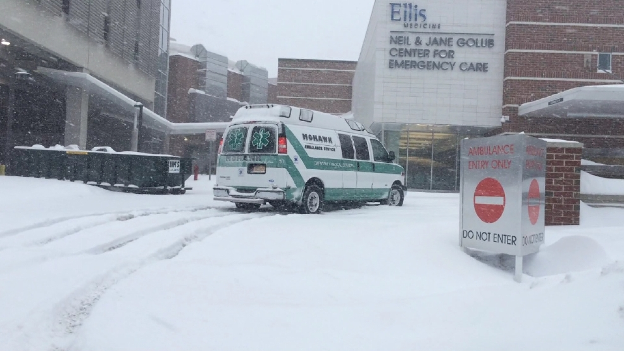
This winter has been operationally different for hospitals across the United States. Several regions experienced record or near-record snowfall, including parts of the South and lower Midwest that historically see little to no sustained winter weather. Hospitals in states such as Texas, Louisiana, Mississippi, Alabama, and across much of the Southeast encountered snow and ice conditions well outside their normal planning assumptions.
For many of these facilities, this was not simply a heavier winter. It was an unfamiliar one.
Facilities, Environmental Services teams, and support services that are typically designed around rain, heat, and hurricane preparedness were suddenly managing extended snow events, repeated freeze-thaw cycles, and prolonged reliance on winter control measures. Entry systems, matting layouts, staffing models, and cleaning protocols were often not designed for sustained winter exposure at this frequency and duration.
As a result, the impact inside hospitals has been more disruptive, more labor-intensive, and more costly than in regions accustomed to regular snowfall.
Winter weather is not just an exterior safety issue. In years like this, it becomes a facility-wide operational stressor with direct implications for EVS capacity, asset preservation, and patient safety.
Why Winter Weather Creates Interior Facility Stress
Snow and ice control measures such as ice melt products, pre-treatment agents, mechanical snow removal, and traction materials are essential for maintaining exterior safety during winter weather events. However, moisture and winter residue do not stop at the door.
Foot traffic continuously carries moisture and particulate into the facility, particularly during active weather events and prolonged cold periods. Once inside, this material migrates rapidly through high-traffic zones, including lobbies, corridors, waiting areas, elevator banks, and clinical adjacencies.
As volume increases, fine particulate embeds into floor finishes, accelerates abrasion, and degrades appearance. Floors lose gloss, discoloration becomes visible, and finish-life shortens. What begins as a temporary condition quickly becomes a persistent operational challenge requiring repeated intervention.
In regions unaccustomed to sustained snow, these impacts are magnified. Entry systems may be undersized, matting insufficient, and response protocols underdeveloped simply because historical conditions never required them.
Why Hospitals Are More Exposed Than Other Facilities
Hospitals face a unique combination of structural and operational realities that amplify winter weather impacts.
They operate continuously, meaning interior contamination never pauses. They have multiple access points serving different populations, each introducing distinct traffic patterns and contamination risks. Infection prevention requirements further limit the use of aggressive chemicals and abrasive methods commonly used in non-healthcare environments.
In healthcare, flooring is not just a surface. It directly influences infection prevention, staff safety, patient perception, and long-term capital preservation. Winter conditions stress all these simultaneously.
Why Winter Weather Disproportionately Impacts EVS Labor
Winter weather does not increase EVS workload evenly. It concentrates labor demand into high-visibility, high-traffic public spaces while simultaneously increasing clinical cleaning requirements.
During extended snow and ice events, EVS teams are pulled into reactive, repetitive work in lobbies, corridors, entrances, and waiting areas. These spaces require repeated attention as winter residue is reintroduced faster than it can be removed.
Instead of progressing routine cleaning schedules, preventive floor care, or project work, staff are forced into continuous re-cleaning cycles. This results in labor displacement. Hours normally allocated to preventive maintenance, detail cleaning, and deep cleaning are consumed by surface-level remediation that produces diminishing returns.
For hospitals in southern and historically low-snow regions, this impact has been particularly disruptive. Staffing models, productivity assumptions, and task frequencies were not built around prolonged winter response, leading to rapid strain on available labor.
At this point, EVS leaders are no longer managing workload. They are managing tradeoffs. Without intentional direction from administration, those tradeoffs default to visibility rather than risk.
Compounding Pressure from Elevated Respiratory Illness Activity
These challenges are occurring alongside elevated respiratory illness activity. This winter has seen sustained circulation of influenza, RSV, and COVID-related illness across many regions. The Centers for Disease Control and Prevention have reported widespread respiratory virus activity, driving higher inpatient census and emergency department utilization.
For EVS teams, this translates into:
- Increased isolation room turnover
- Higher terminal cleaning frequency
- Greater demand for high-touch disinfection
- Increased scrutiny on cleaning compliance and effectiveness
These are non-negotiable clinical priorities. The same workforce responsible for infection risk reduction is also expected to manage sustained winter-related interior degradation. When winter residue is not controlled at the entry level, labor is diverted from patient-care priorities to managing public-space deterioration.
This is not an execution problem. It is a capacity problem.
What Happens When EVS Labor Is Not Intentionally Allocated
When EVS labor is not explicitly allocated for winter remediation and containment, the impact does not disappear. It shifts and multiplies across the organization.
Uncontrolled migration of winter residue is the first consequence. Moisture and particulate move beyond entry points into primary corridors, elevator banks, and clinical adjacencies. Once embedded, routine cleaning is no longer sufficient without increasing risk to finishes and traction.
Labor is then silently diverted from clinical priorities. Staff respond informally to visible deterioration by pulling time from isolation rooms, terminal cleaning, and high-touch disinfection. This shift rarely appears on schedules, but it directly affects throughput and infection prevention outcomes.
Rework increases and productivity collapses. Improper sequencing spreads residue, floors require repeated passes, and more labor is consumed to achieve fewer durable results. Preventive floor care is deferred, accelerating asset degradation and shifting costs from operating budgets into capital budgets.
Safety risk increases as surface conditions fluctuate. Staff fatigue rises. Morale declines. Absenteeism and turnover accelerate precisely when experienced staff are most critical.
Leadership often misdiagnoses the outcome as poor execution or accountability failure when the true issue is insufficient labor allocation for a predictable operational condition.
Entry Control as the Primary Mitigation Strategy
Effective winter response begins with containment. Preventing migration reduces downstream labor exponentially.
Industry best practice supports providing fifteen to twenty feet of walk-off surface at primary entrances, combining exterior scraping with interior absorbent matting. This allows multiple footfalls to remove moisture and residue before it reaches finished flooring.
Guidance from the International Sanitary Supply Association reinforces extended matting systems as a foundational soil control strategy. Facilities unfamiliar with sustained snow events are discovering that existing layouts are insufficient under abnormal winter conditions.
Matting must be properly sized, aligned with traffic flow, and maintained aggressively. Saturated mats redistribute residue rather than capture it, undermining their purpose.
Cleaning Practices and Sequencing in Real-World EVS Operations
During winter conditions with heavy tracked-in residue, the primary challenge is not cleaner selection but the volume and persistence of material entering the facility.
When residue levels exceed what routine processes were designed to manage, even appropriate products struggle to keep pace without sufficient labor, proper sequencing, and effective containment at the entry level.
Effective winter floor care depends on matching cleaning methods and products to the type and volume of soil present, emphasizing physical removal of moisture and grit while protecting floor finishes and maintaining traction. Dry removal must precede wet cleaning to prevent residue spread and finish damage.
Exterior Conditions Still Influence Interior Outcomes
Mechanical snow removal reduces the amount of material available for tracking. Strategic treatment of ramps, transitions, and known slip-risk zones limits unnecessary carry-in. Proper drainage reduces standing meltwater near entrances, decreasing moisture transport into the building.
Facilities unfamiliar with snow events are learning that exterior design and maintenance decisions directly affect interior labor demand and asset wear.
The Environmental Protection Agency has highlighted the long-term corrosive impacts of chloride-based winter treatments, reinforcing the importance of thoughtful exterior management as part of facility preservation.
Why EVS Labor Preservation Is a Patient Safety Strategy
During winters with elevated respiratory illness and unprecedented snow exposure, EVS labor becomes a finite clinical resource.
Every hour spent repeatedly remediating public-space residue is an hour not spent reducing infection risk elsewhere in the facility. Hospitals that intentionally allocate labor, contain residue early, and adjust expectations during active events are better positioned to protect patients, staff, and assets.
Winter weather response exposes whether EVS is treated as a cost center or an operational control function.
Citations
Centers for Disease Control and Prevention (CDC)
Respiratory Virus Activity and Infection Prevention Guidance
https://www.cdc.gov/respiratory-viruses/index.html
https://www.cdc.gov/infectioncontrol/index.html
Used to support statements regarding elevated respiratory illness activity, increased isolation and terminal cleaning demand, and heightened infection prevention pressure on EVS teams during winter months.
Environmental Protection Agency (EPA)
Chloride, Deicing Practices, and Infrastructure Impacts
https://www.epa.gov/nutrientpollution/chloride-salt-and-water
https://www.epa.gov/smartgrowth/snow-and-ice-removal
Used to support discussion of winter treatment materials, chloride-related corrosion, infrastructure impacts, and the importance of thoughtful exterior winter management.
International Sanitary Supply Association (ISSA)
Soil Control and Entrance Matting Best Practices
https://www.issa.com/articles/why-entrance-matting-matters
https://www.issa.com/articles/soil-control-programs
Used to support recommendations related to extended walk-off matting, soil containment strategies, and entry control as a primary mitigation approach.
Healthcare Facilities Management (HFM) Magazine
Maintaining Hospital Floor Surfaces and Asset Preservation
https://www.hfmmagazine.com/articles/4033-maintaining-hospital-floor-surfaces
Used to support statements regarding floor finish degradation, maintenance challenges, and the long-term asset impact of environmental stressors in healthcare facilities.
About the Author
Donald Sipp Jr., MBA, PMP, CHESP, RESE, CHTI
Senior Director, Ruck-Shockey Associates, Inc.
Connect with Donald Sipp Jr.
- LinkedIn: https://www.linkedin.com/in/donaldsippjrmba
- Website: https://ruckshockey.com
Featured Insights
- The Critical Role of Floor and Project Technicians in EVS – Discusses the impact of EVS technicians on safety, infection control, and asset longevity.
- How Contaminated Is Your Stretcher? – Reviews contamination risks of hospital stretchers and transport equipment.
- What Are the Infection Prevention Risks in the Hospital Tray Line? – Explores overlooked infection risks along the hospital tray line and opportunities to strengthen foodservice safety.